
Discover exact benchmark data, square-foot expenditure models, and proven contractor frameworks to budget your bathroom upgrade with complete clarity.
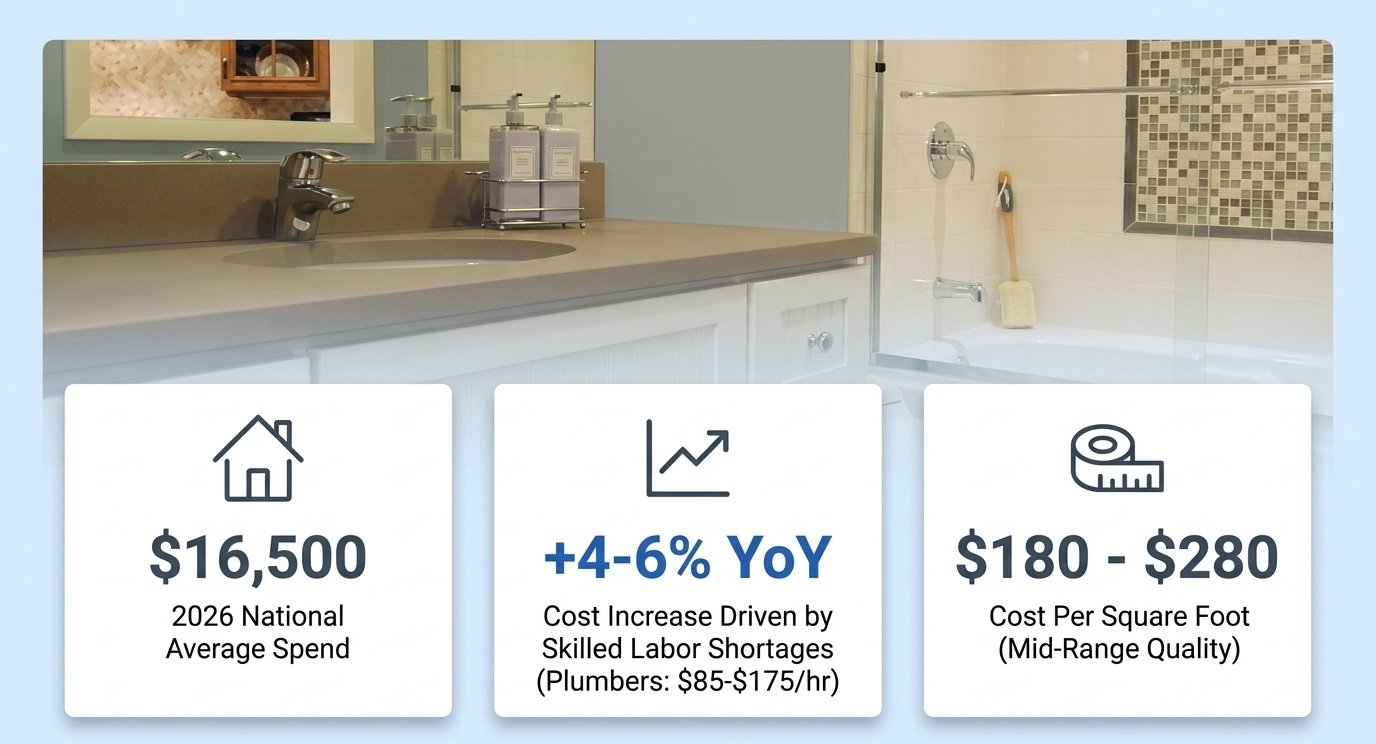
Calculating accurate bathroom remodel costs requires careful financial planning due to fluctuating national averages, which currently range from $16,000 to $16,500 depending on the project scope and regional labor factors. Homeowners must anticipate various hidden expenses such as fixture disposal, demolition fees, and unexpected structural issues behind walls. Maintaining a firm contingency fund of 15–20% is essential for staying on track.
A bathroom remodel is one of the most rewarding home improvements you can undertake. It revitalizes your daily routine while adding tangible property market value. However, without a transparent cost framework, budget overruns can quickly turn an exciting project into an overwhelming challenge. In this comprehensive guide, we unpack the economic factors that dictate current renovation pricing, from material specifications and demolition fees to custom carpentry and professional installation standards.
Understanding Current Bathroom Remodel Costs by Size and Finish Level
Because materials account for the vast majority of the budget—often up to 80%—costs vary widely from $180 to over $350 per square foot. The ultimate cost per square foot depends heavily on whether one selects standard builder-grade fixtures or indulges in bespoke customizations like floor-to-ceiling tiling, floating quartz vanities, and architectural lighting configurations.
Key Term: Rough Plumbing Scope
Rough plumbing refers to installing supply lines, vent pipes, and waste drains inside wall cavities and subfloors before drywall or tiling is installed. Relocating these fixtures significantly increases both structural labor and permit requirements.
Understanding spatial tiers allows you to match your aesthetic ambitions with realistic fiscal targets. Powder rooms, guest baths, and primary master retreats demand completely different plumbing densities, tile coverage, and ventilation capacities. When budgeting, consider both the physical footprint and the structural adjustments required beneath the surface.
| Bathroom Type | Typical Size (Sq Ft) | Standard Finish Range | Luxury Custom Range | Average Timeline |
|---|---|---|---|---|
| Powder Room (Half Bath) | 20 – 30 sq ft | $4,000 – $7,500 | $8,000 – $13,500 | 1 – 2 Weeks |
| Full Guest Bathroom | 40 – 60 sq ft | $12,000 – $16,500 | $18,000 – $26,000 | 2 – 3 Weeks |
| Primary Master Suite | 80 – 140+ sq ft | $22,000 – $32,000 | $35,000 – $65,000+ | 4 – 6 Weeks |
Preserving your existing layout is the single most effective way to protect your budget. Keeping the toilet, vanity, and shower drains in their original locations can save between $2,500 and $5,000 in subsurface plumbing work.
Where the Money Goes: Analyzing the 80% Material Footprint
Because high-end fixtures and bespoke tile surfaces make up the majority of direct expenses, analyzing where every dollar goes helps you optimize your spending. Many homeowners assume labor is the primary driver of renovation costs, but custom imported ceramics, premium brass tapware, and quartz countertops quickly accumulate expenses.
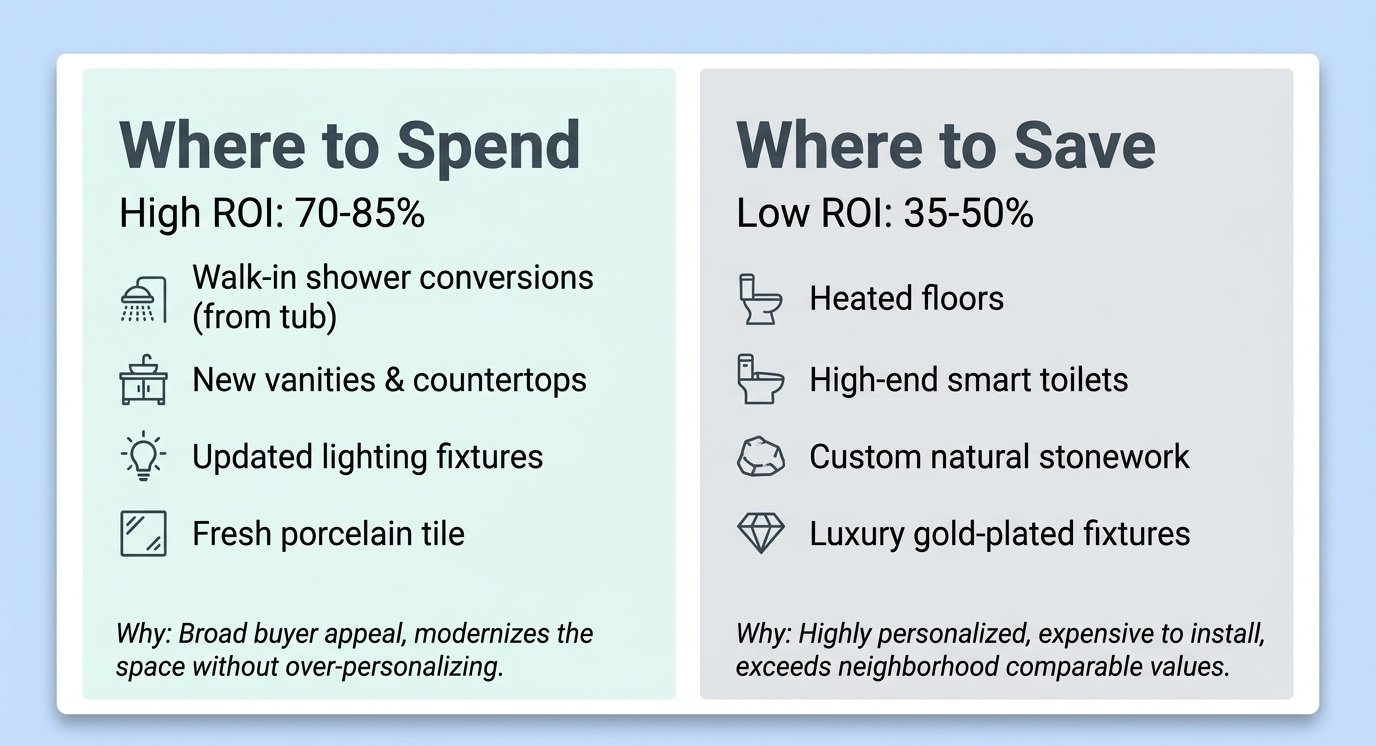 Strategic spending analysis: balancing high-impact features against budget-friendly selections.
When choosing finishes, focus your investments on areas that endure daily use. High-traffic surfaces like vanities, faucets, and shower pans experience continuous moisture and wear. Sourcing certified waterproof floor underlayments and water-efficient thermostatic mixers guarantees lasting performance while keeping utility bills in check.
Tile and fixtures dominate your budget. Prioritize resilient, commercial-grade moisture barriers and solid brass valving first. Decorative accessories and accent lighting can easily be updated later without tearing into walls.
Uncovering Hidden Expenses: Why a 15–20% Contingency Is Essential
During demolition, unexpected challenges often arise once old walls are opened up. Older homes frequently hide subfloor rot, degraded copper piping, outdated electrical circuits, and hidden water leaks. Addressing these issues immediately is essential to protect your home's structure.
Never embark on a wet-area remodel without a liquid contingency reserve of 15% to 20%. Repairing hidden structural moisture rot, mold remediation, or leveling an uneven concrete slab will immediately derail your budget if unbudgeted.
Disposal and preparation fees are another frequently overlooked expense. Tipping charges, dedicated skip bin permits, and surface prep work require proper planning. For specialized floor upgrades, such as resilient modern finishes, working with licensed professionals ensures smooth subfloor preparation and a lasting finish.
Review your contractor's quote carefully to confirm that haul-away and disposal fees are explicitly included. Dump fees for heavy porcelain, cast iron tubs, and dense mortar beds can add several hundred dollars to the final invoice.
- ✓ Verify that subfloor joists are structurally sound and free from hidden water damage.
- ✓ Confirm existing electrical circuits support modern GFCI outlets, radiant heating, and exhaust fans.
- ✓ Test the main water shut-off valves prior to the start of demolition.
- ✓ Reserve a 15–20% emergency fund in an easily accessible account for unexpected structural discoveries.
Maximizing Remodel ROI: The Design-Build Advantage
To maximize your return on investment—which typically yields 60% to 80% ROI—industry experts recommend hiring a professional design-build team. Partnering with a skilled full-service contractor helps streamline construction, keep projects on schedule, and accurately manage rough plumbing and material schedules.
Homeowners tackling complete home transformations often integrate several projects at once. Coordinating with specialists in bathroom renovation alongside experts in flooring and precision interior painting services ensures cohesive design and eliminates scheduling delays between independent trades.
| Renovation Strategy | Typical Budget Variance | Average Resale ROI | Risk of Delays |
|---|---|---|---|
| DIY / Self-Managed Subcontractors | +25% to +45% Overrun | 50% – 60% | High (Scheduling conflicts) |
| Integrated Design-Build Contractor | < 5% Variance (Fixed scope) | 65% – 80% | Low (Dedicated trade crew) |
| Architect-Led Bespoke Build | +10% to +20% Scope Shifts | 60% – 70% | Moderate (Custom material lead times) |
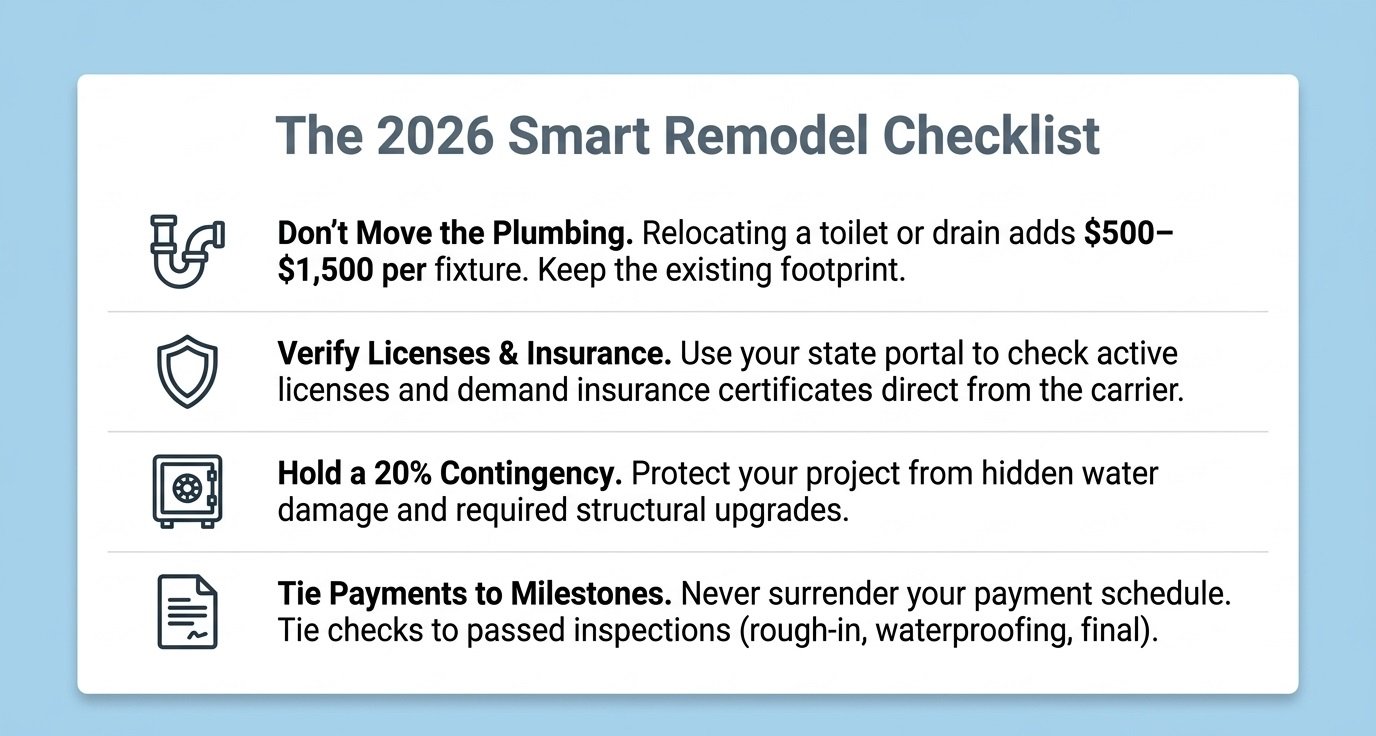
- ✓ Verify fall-to-waste gradients across wet areas prior to tile installation.
- ✓ Ensure ventilation fans meet proper CFM ratings for your room size.
- ✓ Double-check that vanity heights and mirror placements match your lighting layout.
A transparent budget balances quality materials with licensed trades. Prioritize durable moisture protection, keep rough plumbing in place where possible, and partner with a design-build team to preserve your 60–80% ROI.
Waterproofing shortcuts are the leading cause of post-renovation structural failures. Inadequate membrane bonding or improper corner taping can lead to costly moisture damage, often requiring complete demolition within two to three years.
Frequently Asked Questions About Bathroom Renovation Costs
Always verify that your trade team is fully licensed and insured. In Australia, hiring an accredited builder ensures all waterproofing membranes and electrical upgrades meet current Building Code of Australia (BCA) standards.
Ready to Bring Precision & Elegance to Your Next Renovation?
Whether you are planning a modern master bathroom makeover, complete interior upgrades, or resilient surface coatings, the team at Renovaco Group PTY LTD brings meticulous craftsmanship and fixed-scope pricing to every project. Learn more about our leadership on Matthew Jahanbakhsh's profile or connect with us on the official Renovaco LinkedIn Company Page.